
Key Takeaways
- Myopia comes from a physical change in the eye that stays with you, so it cannot be undone.
- Blurry distance vision can still be corrected with glasses, contacts, or laser surgery.
- Early steps can help slow how fast myopia progresses in children and teens.
- Daily habits like time outdoors and screen breaks support healthier vision.
- Regular exams with an eye doctor in Urbandale help track changes over time.
Your child holds a book close and reads with ease, yet the words on a classroom board across the room turn fuzzy. That gap between near and far is what myopia looks like day to day, and our team at Advanced EyeCare Center P.C. sees it often in growing kids.
Myopia happens when the eye grows a little too long or the cornea curves more than usual. Light then lands just in front of the retina instead of right on it, so faraway things look blurry. That’s why people call it nearsightedness. Close objects typically stay sharp, while distant ones lose their edges.
No, myopia cannot be reversed because the change in the eye’s shape or length is permanent, though the blurry distance vision it causes can still be corrected.
Glasses and contacts bend light so it focuses correctly again, giving you clear sight without changing the eye itself. And while the underlying shift doesn’t undo itself, early steps can slow how quickly myopia progresses. That matters most for children, whose eyes keep growing for years.
Can Laser Surgery Fix It for Good?
LASIK reshapes the cornea to correct how light enters the eye, so many adults see clearly afterward without glasses. The length of the eye, however, stays the same. Surgery corrects the vision, not the root shape, which is why an eye doctor will still watch your eye health over time.
Why Myopia Progresses in Kids and Teens
Childhood is a season of rapid growth, and the eyes grow right along with everything else. As the eye lengthens, a mild prescription can shift to a stronger one from one year to the next.
Family history plays a part too. When one or both parents are nearsighted, the odds go up for their children. Long hours of close-up work also add pressure, especially with screens and books held close to the face, with little time spent outdoors. More screen time and less outdoor play tend to accelerate myopia.
When Does Myopia Usually Stabilize?
For many people, myopia slows down by the late teens or early 20s, once the eyes finish most of their growth. Some cases keep shifting into adulthood, so steady checkups remain helpful even after the school years.
Ways to Slow Myopia Progression
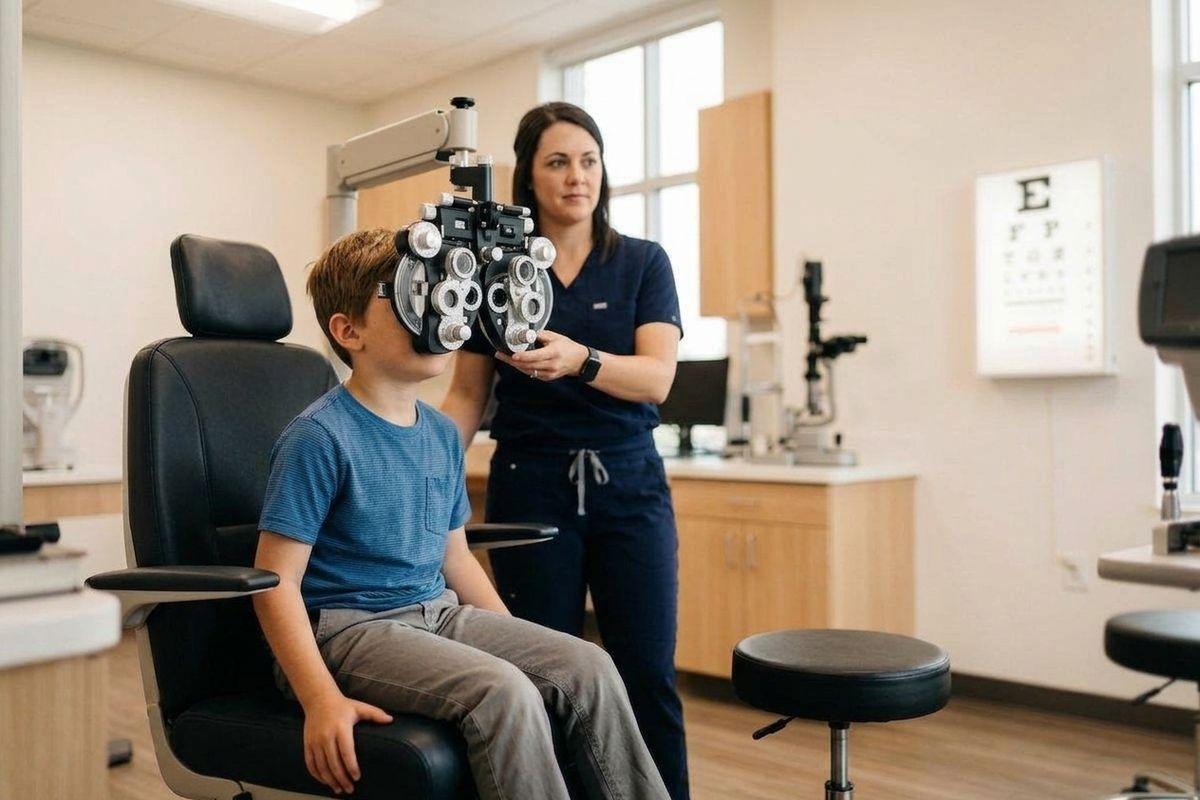
Several options can help slow how fast a child’s prescription changes. Our team can talk through which fits your child’s eyes and daily routine. Options can include:
- Orthokeratology (ortho-k) lenses, worn overnight, gently reshape the cornea while your child sleeps and come out in the morning.
- Myopia control glasses or soft contact lenses designed to slow progression during the day.
- Low-dose atropine eye drops, used at home, that can help reduce how quickly myopia advances.
Everyday Habits That Help
Small daily choices add up over time. A few simple routines can support your child’s vision alongside any treatment plan. Try to:
- Aim for about 2 hours of outdoor time each day, since natural light seems to help.
- Use the 20-20-20 rule. Every 20 minutes of close work, look at something 20 feet away for 20 seconds.
- Limit long stretches of close-up screen time and encourage regular breaks.
How Regular Eye Exams Protect Long-Term Vision
Vision changes often creep in quietly, which is why routine exams matter so much. We can catch small shifts early, before they start to affect school or daily life.
Regular visits help our team track prescription changes year to year and see patterns as they form. From there, the care plan can adjust as your child grows, keeping treatment matched to what the eyes need now. It’s a steady, thoughtful way to stay ahead of blurry days.
At Advanced EyeCare Center P.C., care is built around real life, whether you’re managing work, school pickups, or family time. Contact our team today to schedule an eye exam and take the next step in your family’s eye care journey.